Commercial evaluation under greenhouse conditions
Detection of active root biomass and its impact on water and nutrient uptake and on production.
AKAI's role
A biostimulant developer needed to prove their product's effect on crop physiology under real greenhouse conditions. AKAI supplied the measurement layer — digital phenotyping to track what was actually happening inside the plant, not just what showed up at harvest.
The problem
Greenhouse rose growers in Colombia operate high-value crops increasingly exposed to drought, heat, and salinity. Yield swings tied to this kind of abiotic stress are hard to manage reactively — by the time stress is visible, productivity is already lost.
AKAI solution
Monitoring physiological variables throughout the entire rose crop cycle made it possible to identify the real impact of an algae extract on each internal process of the plant, explaining the increase in production and quality. Identifying these behaviors in early stages allows sound decisions to be made with anticipation.
Results
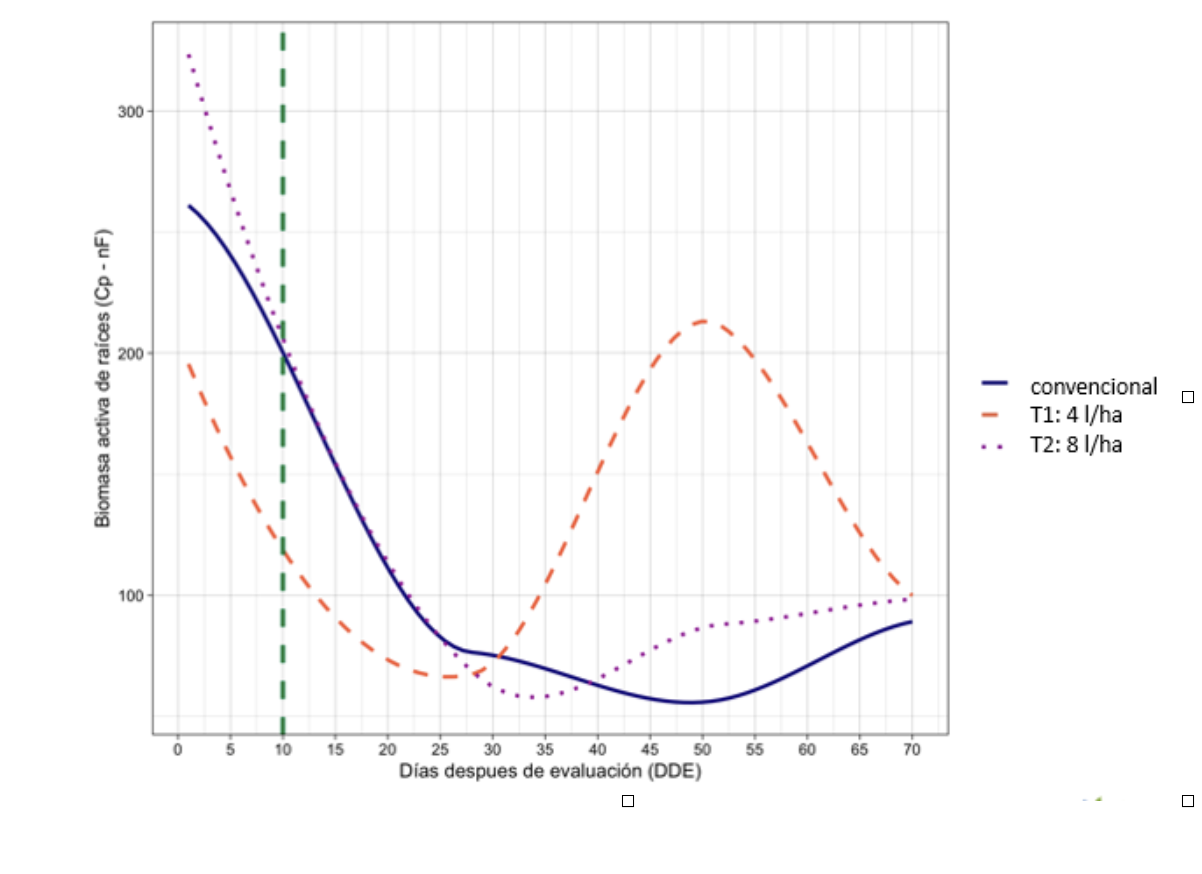
Active root biomass (Cp — nF) over days after evaluation (DDE)
Water and nutrient extraction (Cs — nF) over days after evaluation (DDE)
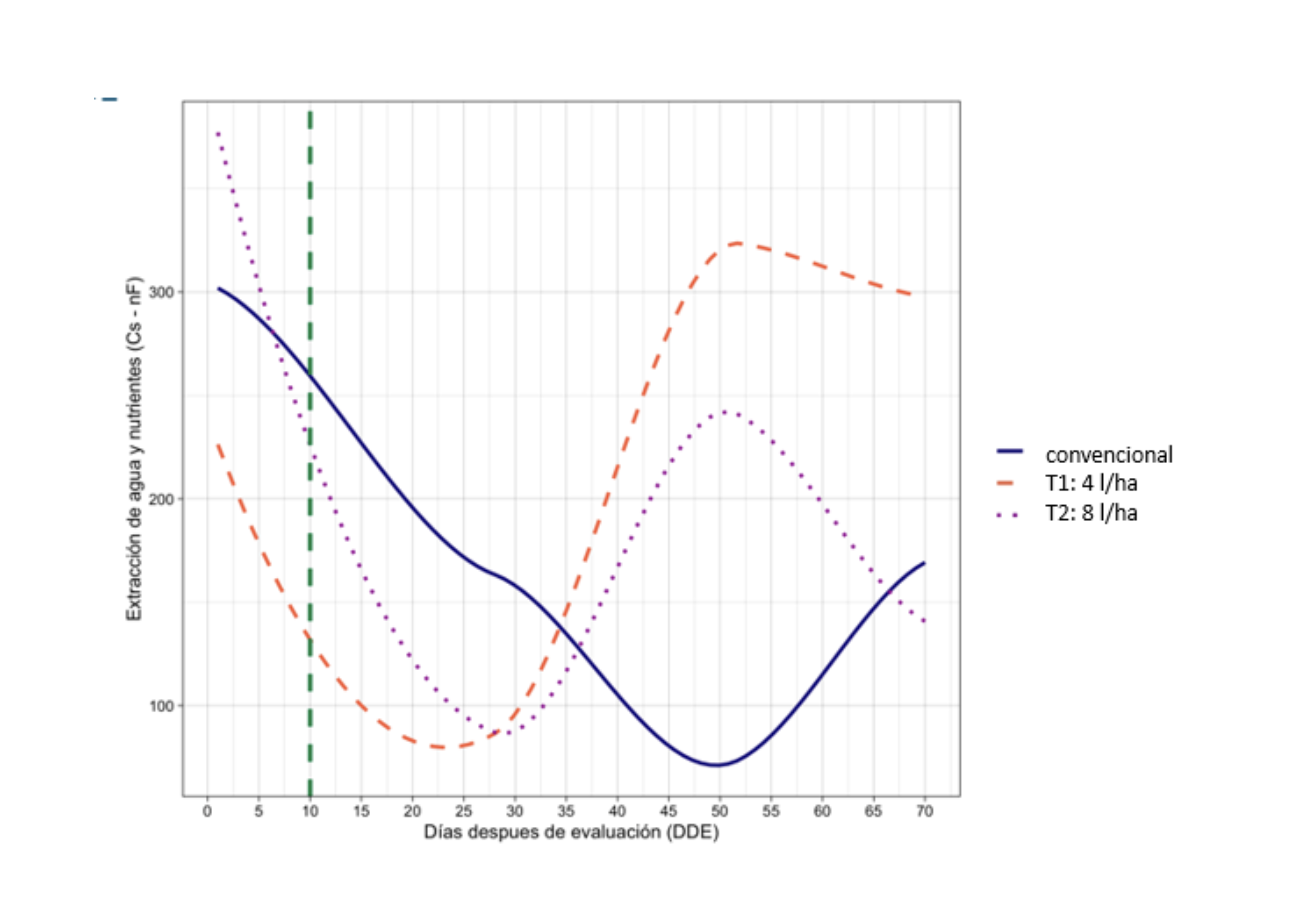
The result isn't just a stronger root system — it's proof that physiological change can be measured and forecast weeks before it shows up in yield. That's the same measurement layer AKAI applies across every project, from greenhouse trials to plantation-scale palm.
BEFORE SYMPTOMS APPEAR, the interaction between the instruments measuring crop metabolism and the geopositioning provided by the drone makes it possible to take THE RIGHT decisions.
The trial compared treated and untreated blocks across a full growth cycle, tracking root biomass, production, and downstream economics. AKAI's sensing pipeline surfaced the root-level divergence early, before it was visible in canopy or yield — giving growers a lead-time advantage on the decisions that mattered.